One of the World's Most Beloved Stitching Crafts
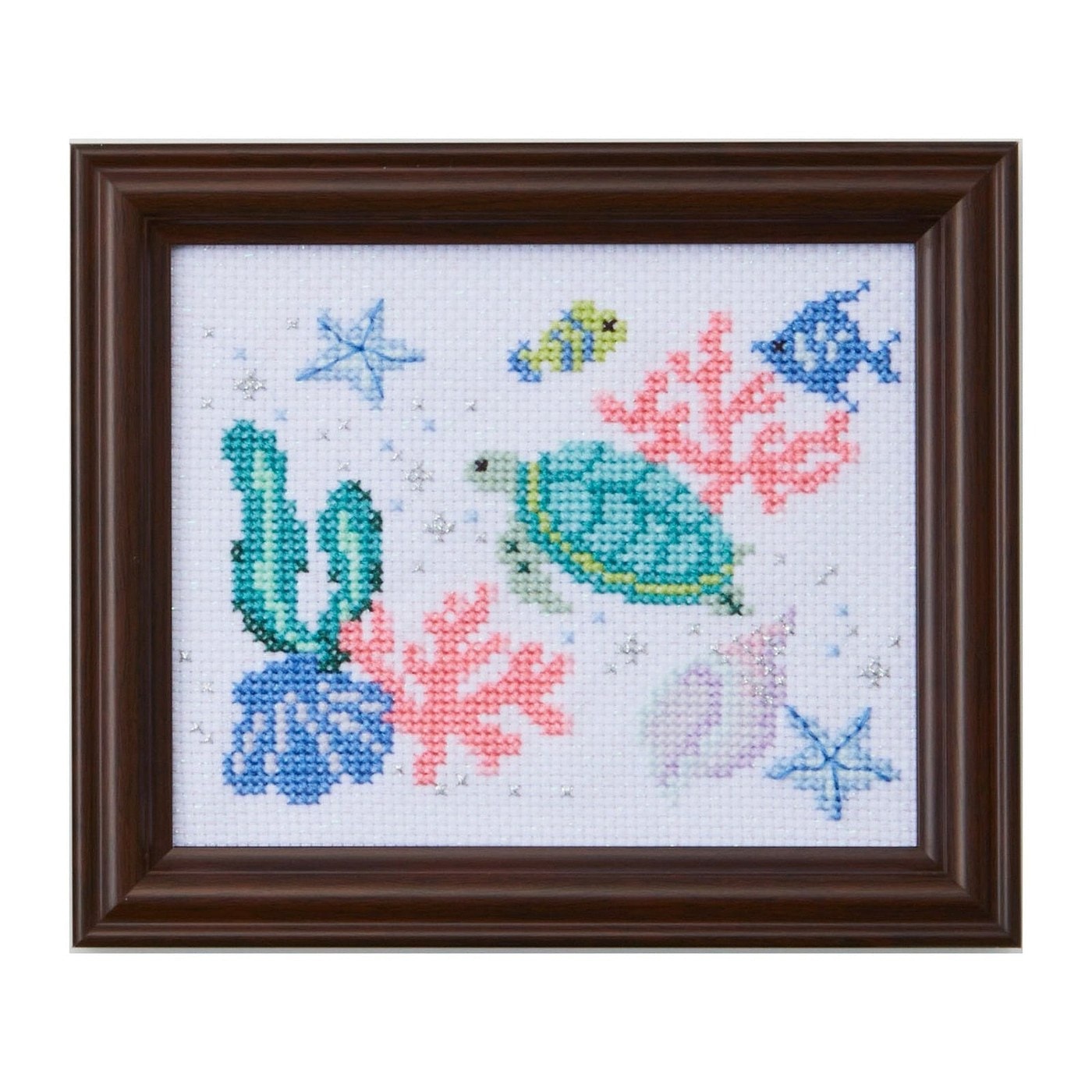
Cross-stitch is a form of counted embroidery built from a single, simple stitch: two short diagonal stitches that cross to form a small X. Repeat those X's across a gridded fabric and they add up into letters, borders, and surprisingly detailed pictures.
Because every stitch lands on a regular grid, cross-stitch is famously easy to pick up—relaxing, rhythmic, and hard to put down. It's stitched by absolute beginners and lifelong makers alike, all around the world.
How Is Cross-Stitch Different from Other Embroidery?
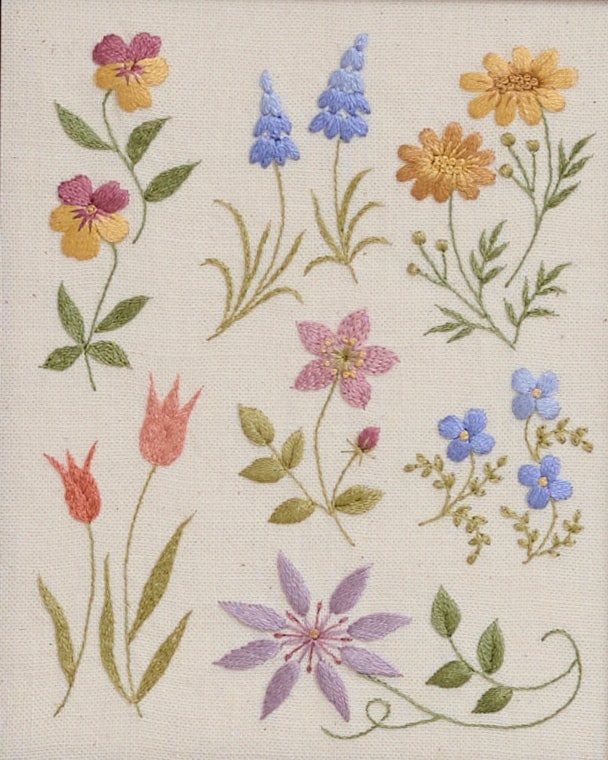
Cross-stitch is actually a type of embroidery—but it works differently from the free, painterly stitching many people picture. Instead of drawing shapes with thread, you count squares and fill them in.
| Cross-Stitch | Surface Embroidery |
|---|---|
| Counted onto a fabric grid | Stitched freely onto the fabric |
| Built from one X-shaped stitch | Uses many different stitches |
| Worked from a chart | Worked from a drawn design or freehand |
| Even-weave (Aida) cloth | Almost any fabric |
| Crisp, geometric, pixel-like | Fluid, painterly shapes |
How It Works: Counting the Grid
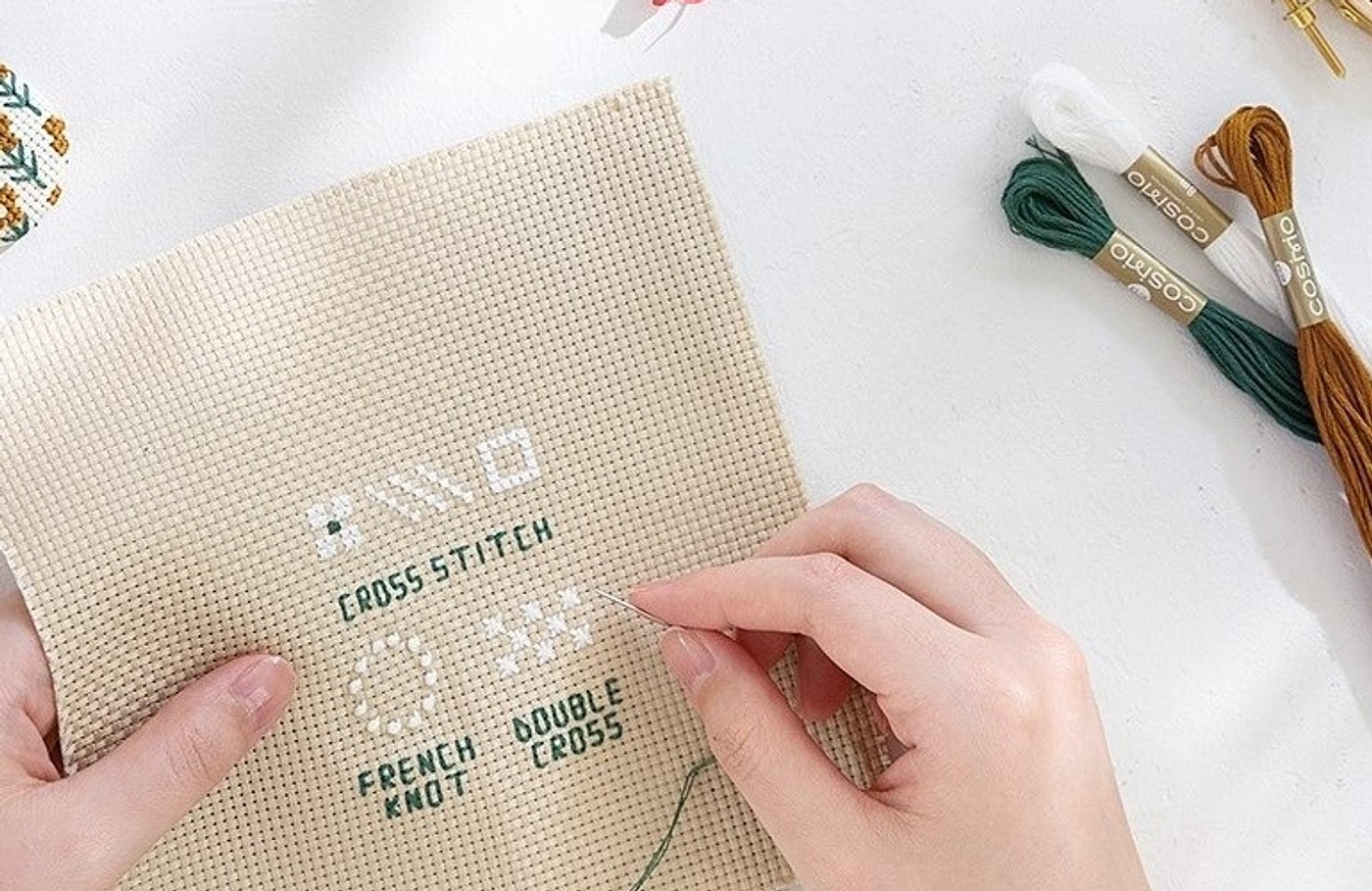
The secret to cross-stitch is the fabric. It's woven as an even-weave—the same number of threads running each way—so the surface forms a tidy grid of little squares.
You follow a chart, where each colored square tells you which color to stitch in the matching square on the cloth. Count the squares, place your X's, and the design appears one stitch at a time. Outlines and small details are often added afterward with backstitch or French knots.
Fabric is measured by its “count”—the number of squares (or threads) per inch. A higher count means smaller squares and finer detail; a lower count means bigger, faster stitches. The very same chart comes out larger on a low-count cloth and smaller on a high-count one.
Floss, Fabric, and a Blunt Needle
One of cross-stitch's quiet joys is how little you need to begin. At heart it's just floss, cloth, and a blunt-tipped needle.
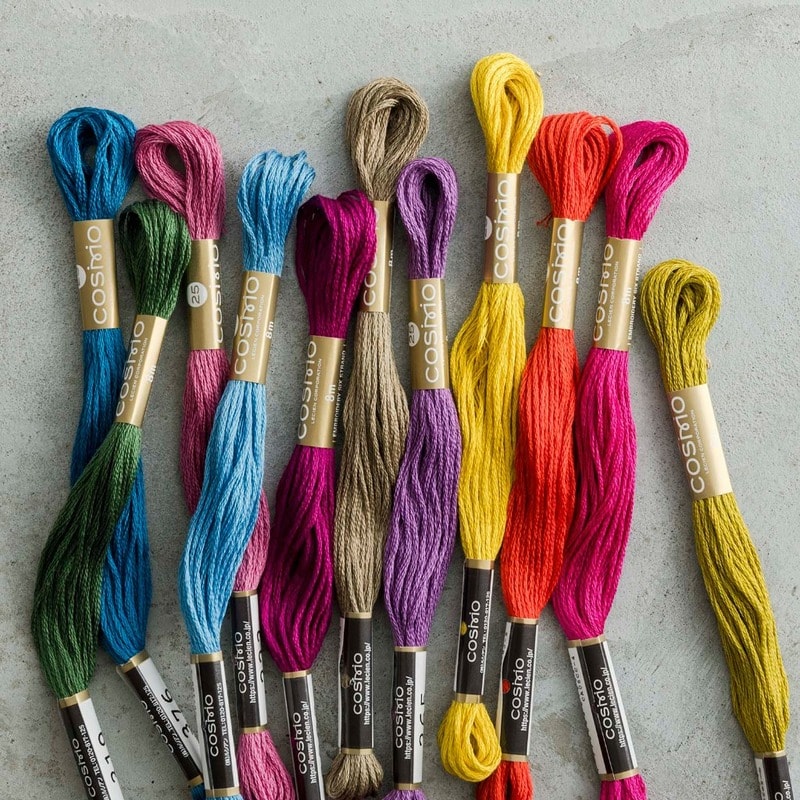
COSMO No. 25 embroidery floss is a six-strand cotton thread: you gently separate the strands and use as many as your fabric count calls for—often two for everyday Aida. A long-established COSMO embroidery floss line developed in Japan, it comes in 500 solid colors, plus variegated multi-color shades that shift softly from one tone to the next as you stitch.
Cotton floss is the everyday choice, but cross-stitch welcomes other threads too—variegated cotton for gentle color shifts, thicker pearl (perlé) cotton for texture, and metallic threads such as COSMO Nishikiito, used for decorative accents.
For the cloth, COSMO offers even-weave embroidery fabrics, including Java cloth-type fabrics, in several counts, so you can choose bold and quick or fine and detailed.
A Craft with Global Roots
Unlike some regional needlework, cross-stitch belongs to the whole world. Simple counted crosses appear in folk textiles across Europe, the Middle East, and Asia—worked onto clothing, linens, and household cloths.
For centuries it was also a teaching craft. Young stitchers made “samplers”—rows of letters, numbers, and motifs—to practice their skills and record patterns, many of which survive in museums today.
Cross-stitch has faded and returned with fashion over the years, and it's thriving again now—part of a wider love of slow, screen-free, mindful making.
Ancient–1500s
Folk Origins Worldwide
1600s–1700s
The Age of Samplers
1800s–1900s
A Household Craft
Today
Modern Revival
From Simple Samplers to Detailed Scenes
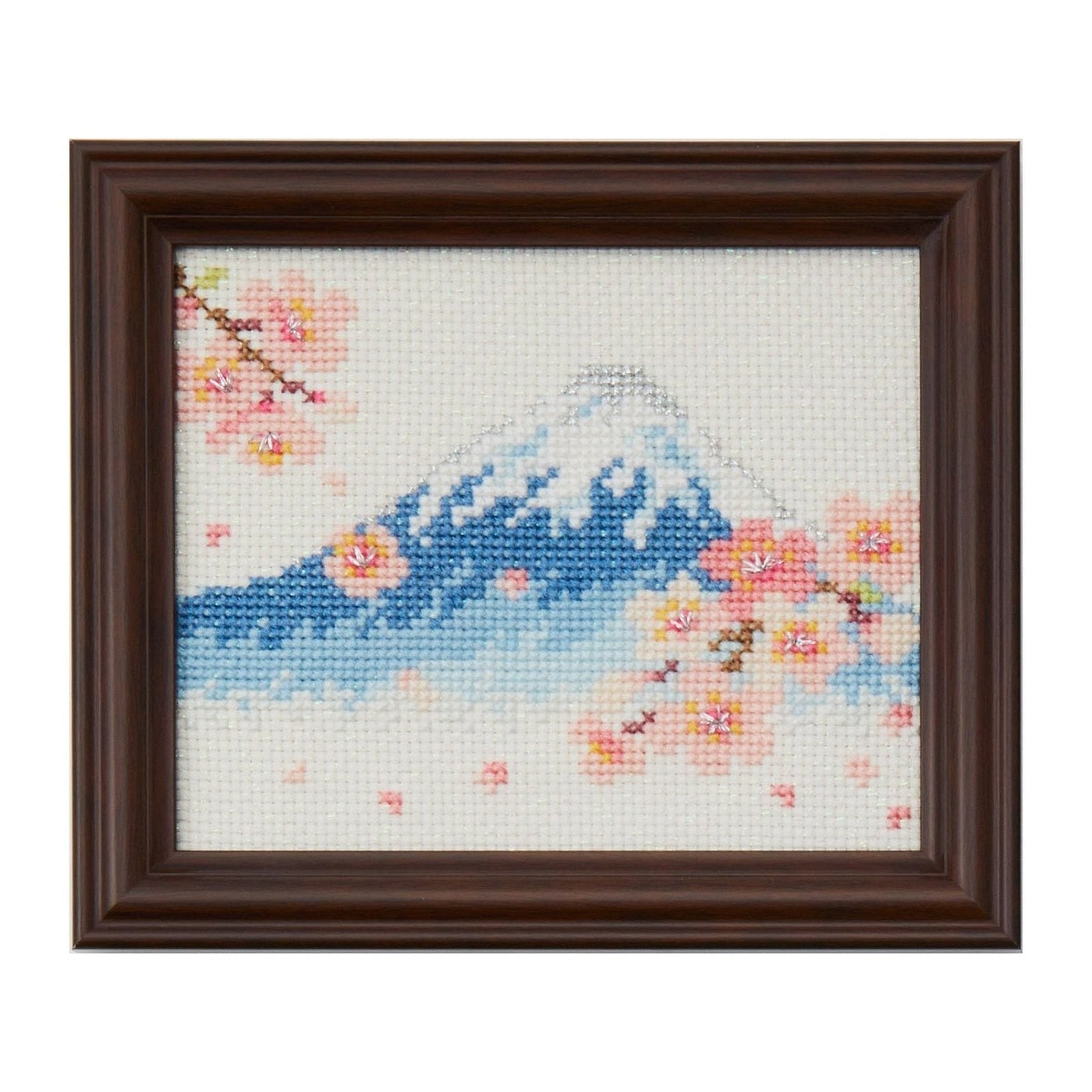
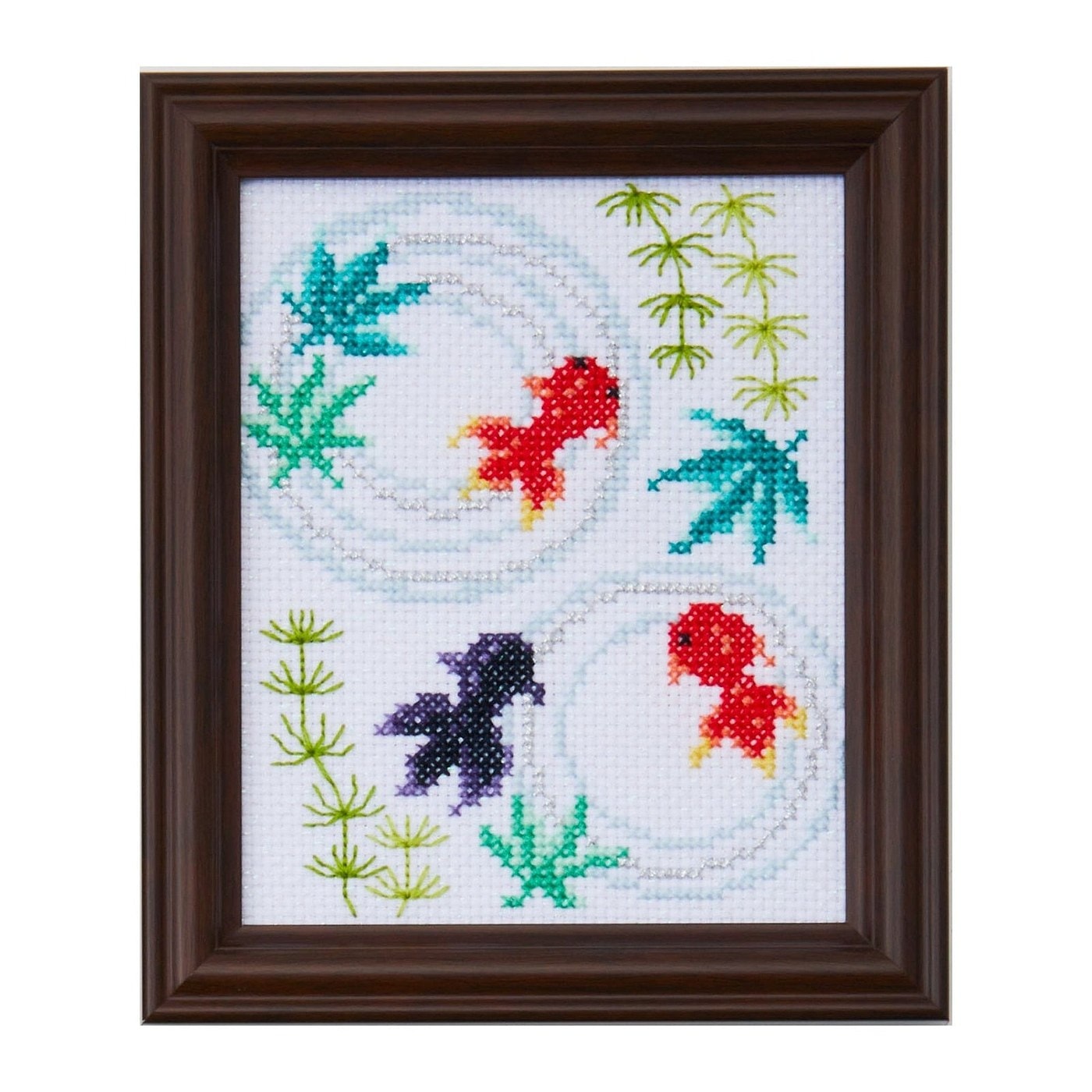
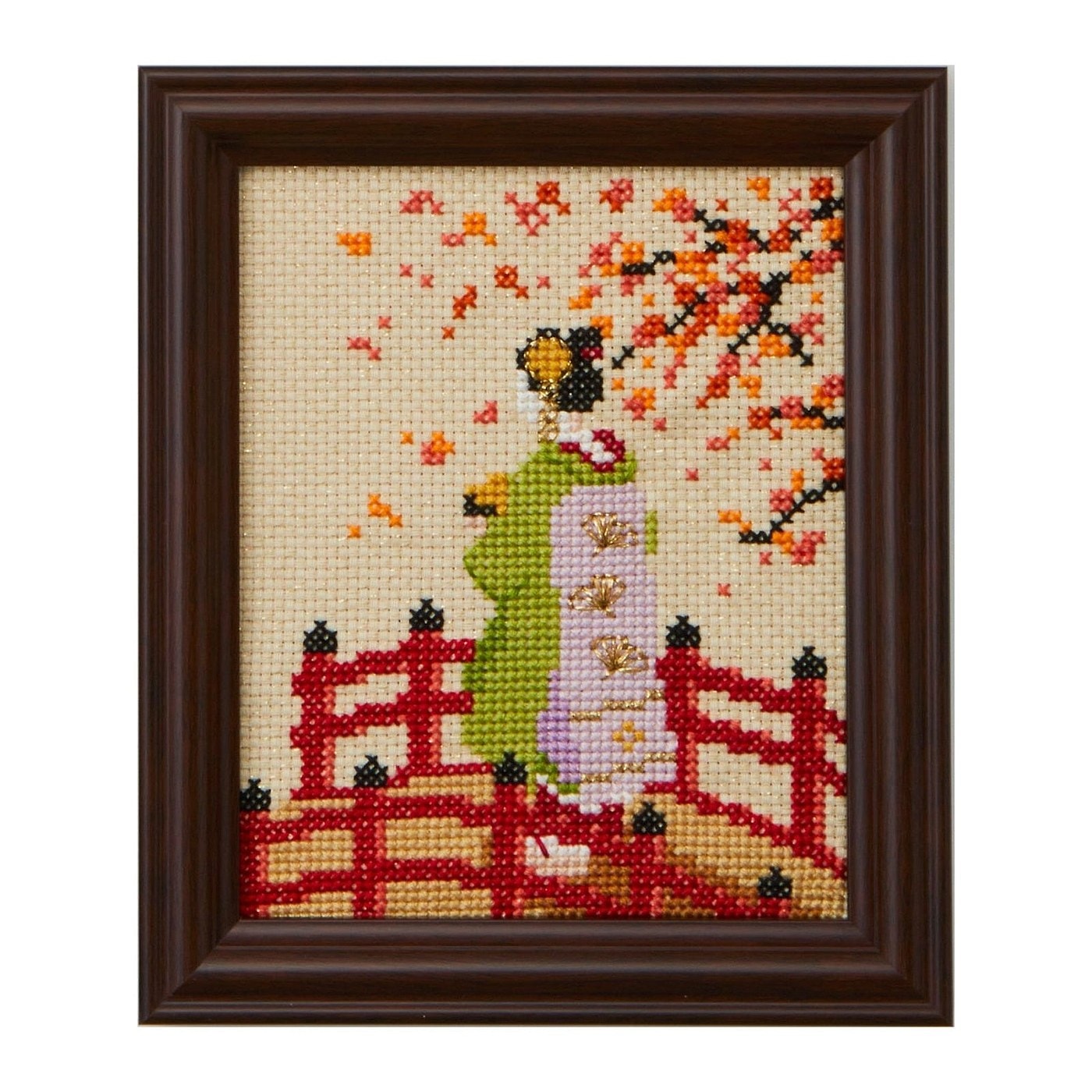
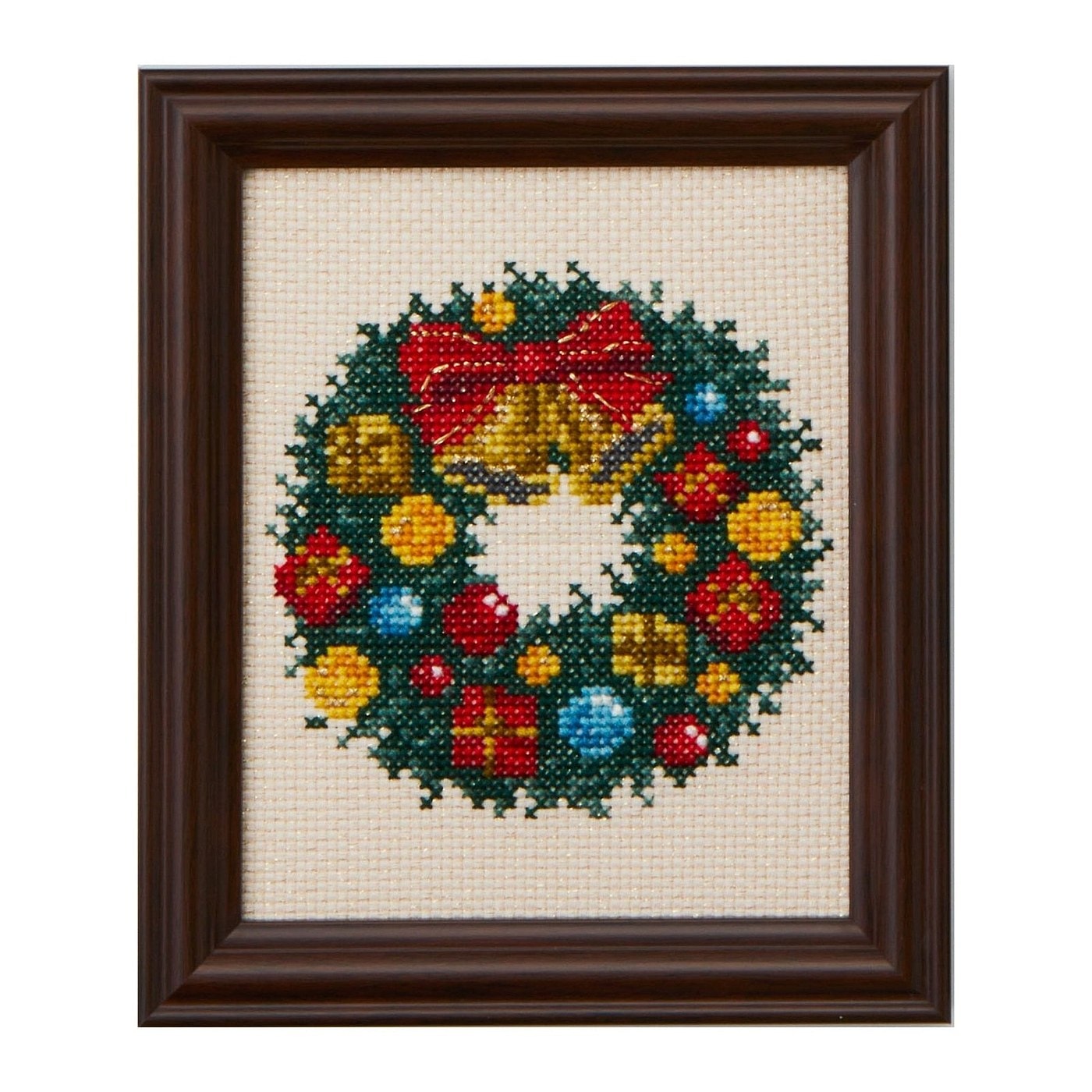
With enough little X's, cross-stitch can capture landscapes, seasons, and stories. COSMO's own Sparkling Japanese Seasons kits show just how much detail—and shimmer—counted stitching can hold.
Start Your Cross-Stitch Journey
To begin, you only need a few things
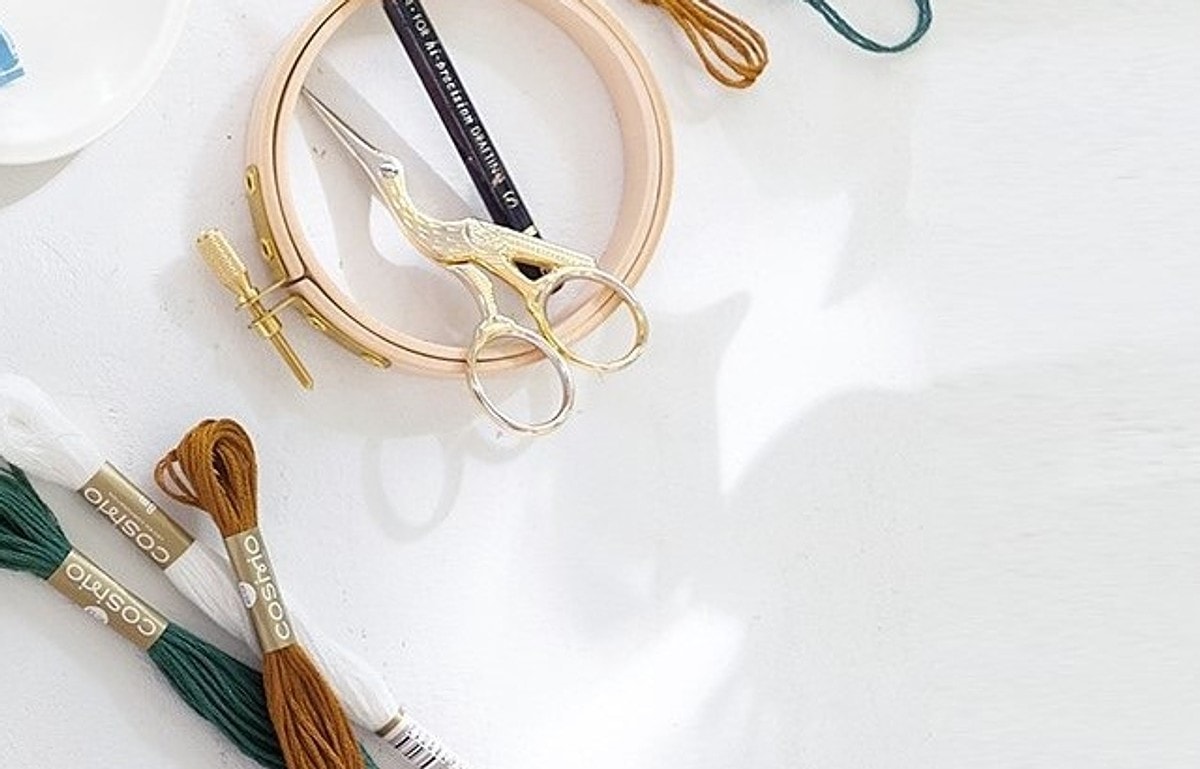
Pick a small chart, thread your needle, and place your first X. From there it's simply one stitch at a time—an easy, absorbing rhythm that turns a blank grid into something you made by hand.
- Six-strand cotton floss (COSMO No. 25)
- Even-weave or Aida cloth
- A blunt tapestry needle
- A chart or pattern to follow
- An embroidery hoop (optional, but handy)