
Traditional Rhythm, Everyday Objects
Sashiko has always been connected to the life of cloth. Originally developed as a way to reinforce and repair fabric, its repeated running stitches created strength, warmth, and beauty at the same time.
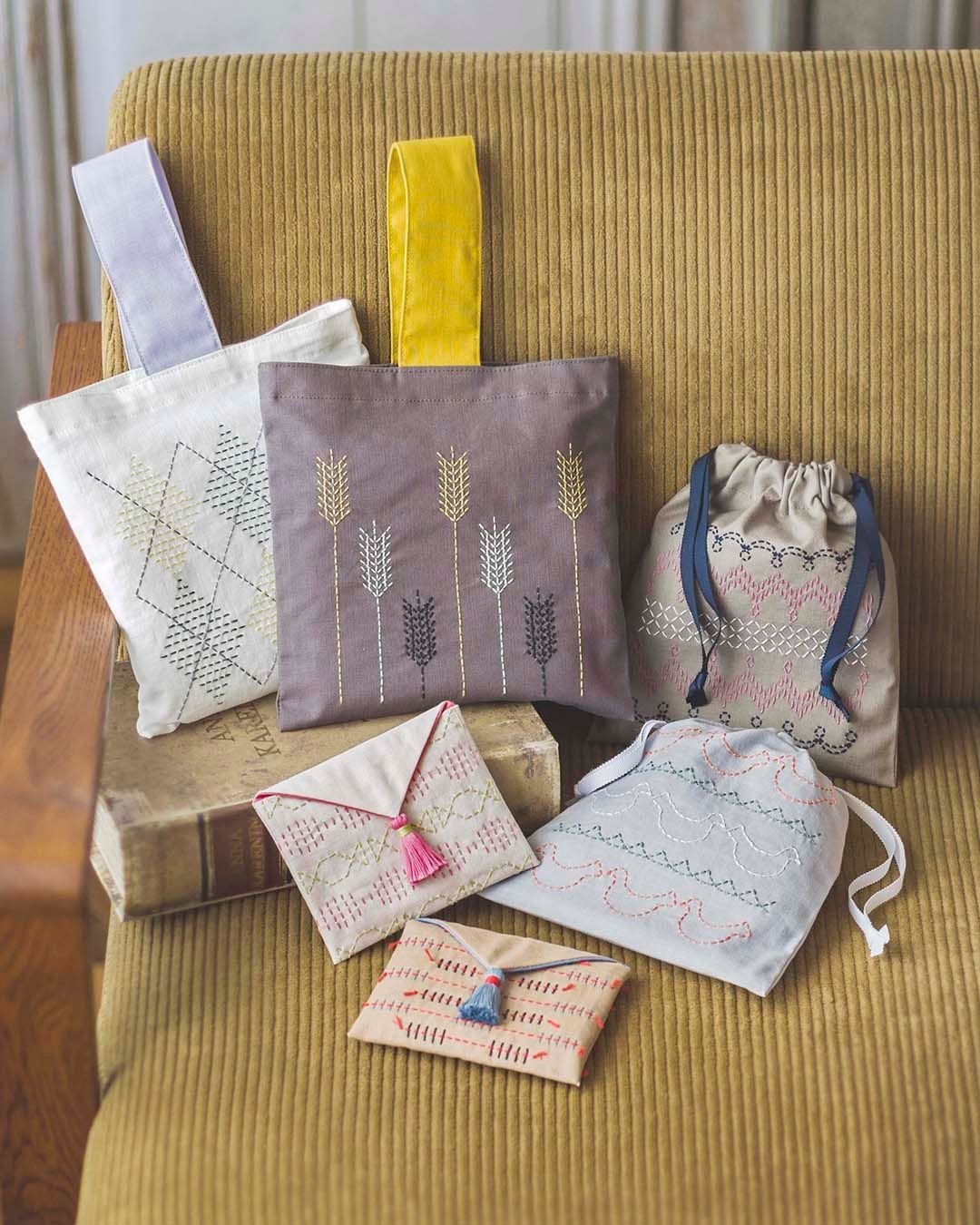
Today, sashiko can move beyond the sampler or framed textile and become part of the objects we use every day—a pouch carried in a bag, a coaster placed on the table, or a small cloth resting quietly at home.
With its soft matte texture and smooth stitching rhythm, COSMO® hidamari® Sashiko Thread brings the traditional character of sashiko into modern soft goods: practical pieces shaped by both function and the maker’s hand.
Soft Goods, Made to Be Used
What sashiko brings to usable cloth
Unlike embroidery created only to be displayed, soft goods are touched, carried, opened, folded, and used. This changes the way we think about stitching—the thread must not only look beautiful, but also work together with the structure of the fabric.
The result is embroidery that does not simply decorate an object—it becomes part of the object itself.
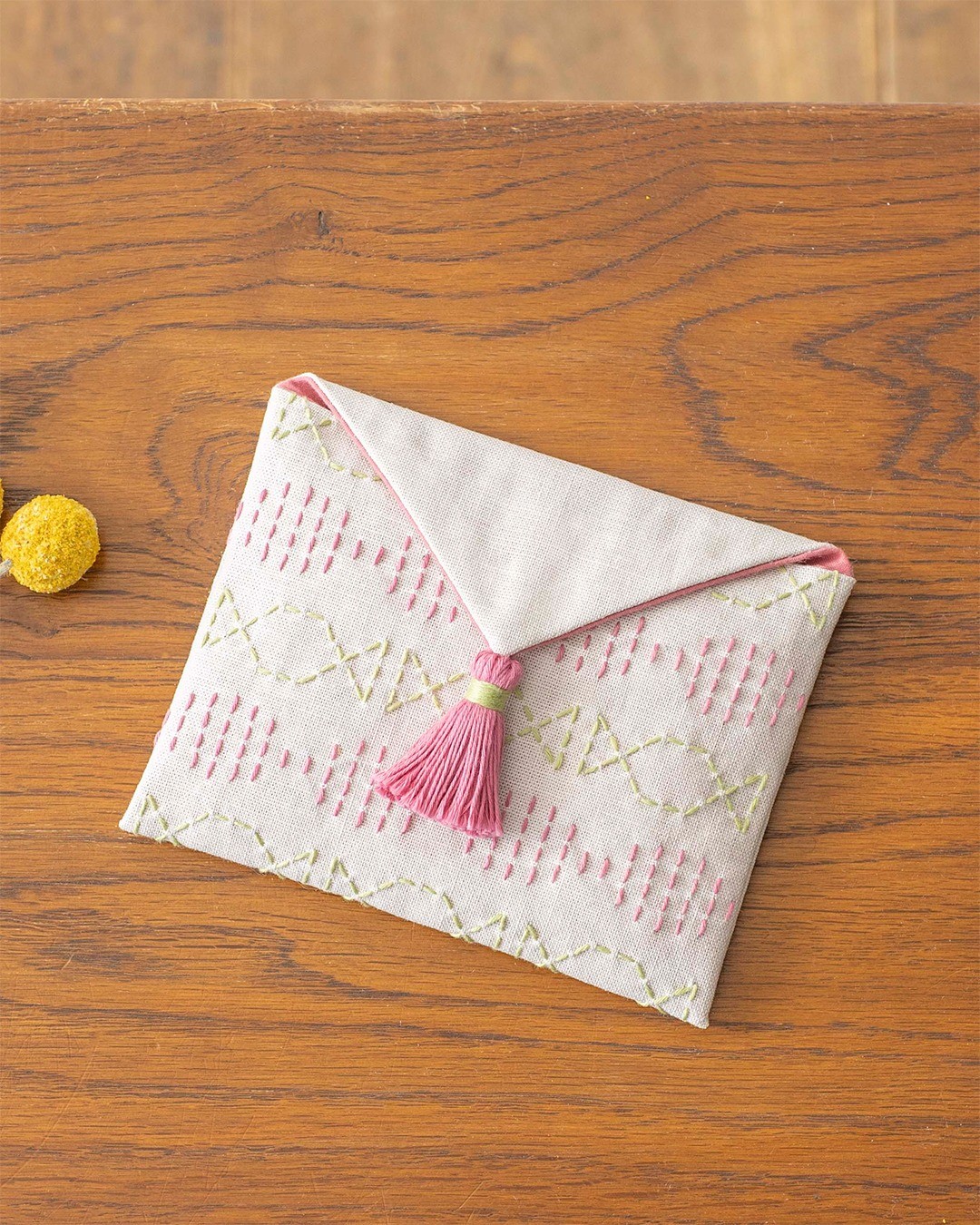
- Repeated patterns that create rhythm and balance
- Raised stitches that add quiet texture
- Strong visual contrast between thread and cloth
- A handmade quality that becomes richer through use
What Everyday Cloth Asks For
Choosing fabric and managing tension
Soft goods require a different approach from framed embroidery. Pouches, bags, and cloth accessories experience friction, movement, and repeated handling, so thoughtful preparation helps preserve the stitching.
- Keep stitches slightly relaxed on denser fabrics such as cotton canvas or heavier cloth so the fabric remains flat
- Avoid pulling too tightly, which can cause puckering
- Allow the natural texture of the matte thread to remain visible—a relaxed stitch creates the calm, even rhythm that defines sashiko
Pre-Wash Your Fabrics
Natural fabrics such as linen and cotton canvas can shrink slightly during their first wash.
Always pre-wash and press base fabrics before transferring sashiko patterns. This prevents the fabric from contracting around the stitches later, helping finished soft goods remain flat and smooth after laundering.
Protecting the Inside of Soft Goods
Functional pieces such as pouches, zip bags, and coin purses need protection on the reverse side. Before assembling your finished item:
- Apply a lightweight fusible interfacing to the back of the stitched panel
- Or add a full interior lining to cover thread tails
- Either approach helps prevent thread ends from catching on keys, pens, cosmetics, or other items inside the bag while adding stability to the finished piece
Planning for Seams
Sashiko patterns should be planned with construction in mind. Leave at least a ½-inch (1.5 cm standard seam allowance) unstitched around fabric panels so running stitches are not caught, cut, or weakened when seams are sewn.
This small planning step helps preserve both the appearance and durability of the finished object.
A Family of Forms
Pouches, cloths, and small accessories share one idea: sashiko that lives with you, not only on the wall.
Pouches and Mini Totes
Using COSMO® hidamari® Sashiko Thread, makers can create
Small bags are one of the most natural ways to bring sashiko into daily life. Their surfaces provide enough space for repeating patterns while remaining approachable projects for exploring stitch rhythm and composition.
A simple pouch becomes something personal—a small object carrying both function and the memory of making.
- Geometric borders
- Repeating floral motifs
- Circular patterns
- Textured background fills
Cloth, Coasters, and Table Accents
Sashiko has a natural place in the home. Coasters, folded cloths, and small textile pieces bring handmade texture into everyday moments.
A stitched coaster placed beneath a cup or a folded cloth displayed in a basket transforms ordinary household objects into quiet expressions of craftsmanship. The beauty of sashiko often appears through repetition—even simple running stitches create depth as light moves across the raised thread surface.
Coin Purses and Decorative Closures
For additional details
Small accessories offer the perfect scale for experimenting with detailed motifs. Floral patterns, French knots, and contrasting thread accents create focal points while keeping the overall design balanced.
The combination of different thread personalities creates depth without losing the traditional feeling of sashiko.
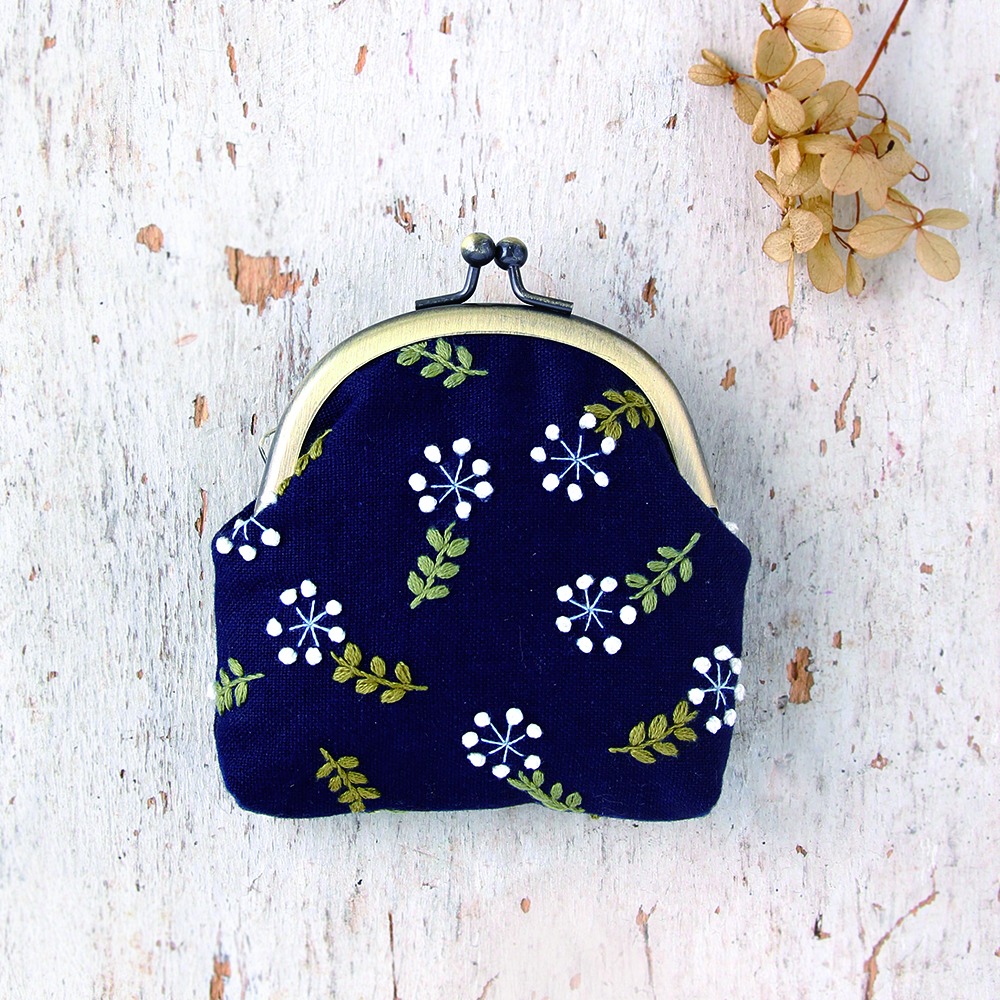
- Use COSMO® No. 25 Embroidery Floss for smaller decorative motifs
- Add fine floral accents or outlined elements
- Keep hidamari® as the main sashiko thread for the characteristic texture and weight
Botanical Zip Pouches
When creating pieces that will be handled frequently
A zip pouch combines beauty and practicality. Botanical vines, flowers, and repeating motifs work naturally with sashiko’s calm, structured rhythm.
Good construction allows the embroidery to remain beautiful through everyday use.
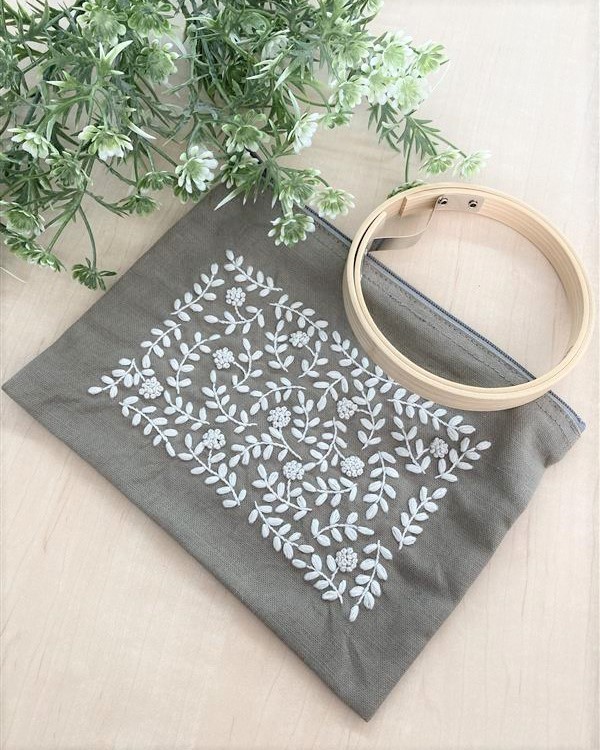
- Reinforce the reverse side
- Protect thread tails with lining or interfacing
- Consider how pattern placement interacts with seams and closures
Choosing the Right Thread and Needle
COSMO® hidamari® Sashiko Thread
The character of sashiko comes from the relationship between the fabric and the thread.
- 40 colors — 20 solid colors in the No. 88 series and 20 multi-color / variegated colors in the No. 89 series
- Signature mini-cone winding
- Soft matte cotton texture suited to sashiko stitching
- Smooth, non-divisible construction for the full, even appearance associated with sashiko
Pairing hidamari® with the Right Needle
Use a long sashiko needle with
Because hidamari® is a thicker, non-divisible sashiko thread, needle choice affects stitching comfort. The correct needle helps the thread pass through the fabric without unnecessary friction or fraying.
- An elongated eye for easier threading
- A sturdy shaft that moves smoothly through fabric
- A size appropriate for the fabric thickness
COSMO® No. 25 Embroidery Floss
No. 25 can complement sashiko projects as an accent thread. Made from 100% extra-long staple cotton, it offers a smooth surface with soft sheen and fine detail capability for small motifs and decorative accents.
Together, hidamari® and No. 25 allow makers to combine sashiko texture with embroidery detail.
- Over 500 solid colors
- Smooth surface with soft sheen
- Fine detail for small motifs and decorative accents beside sashiko weight
Keeping Tools Close
A small sewing box with
A peaceful stitching practice begins with an organized workspace. Because sashiko is built on repetition, keeping materials accessible encourages the simple habit of stitching a little at a time.
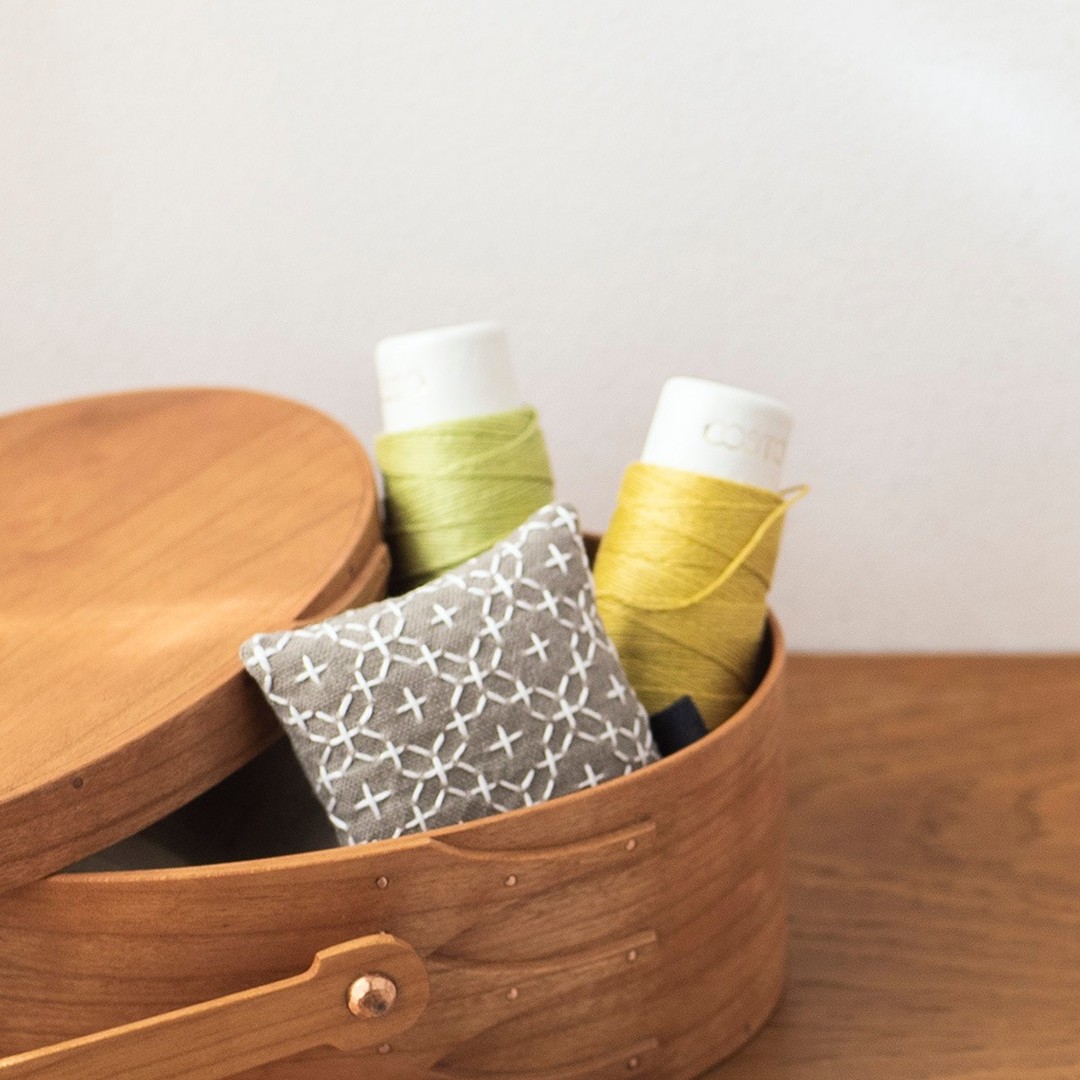
- hidamari® cones arranged by color
- Needles ready for the next project
- A pincushion nearby
- Essential tools kept together
Tips for Sashiko Soft Goods
A few calm habits keep usable pieces flat, lasting, and true to sashiko’s rhythm.
- Plan a small palette—choose a focused color group so stitch pattern and fabric texture stay the main feature.
- Use the right needle—pair hidamari® with a long, sturdy sashiko needle so matte cotton can glide without dragging or fraying.
- Pre-wash and press fabrics before transferring patterns so soft goods stay smooth after laundering.
- Mind the seam allowance—leave at least a ½-inch (1.5 cm) unstitched border around fabric panels so sashiko stitches remain clear and protected during assembly.
- Protect the reverse side—for pouches, bags, and other functional items, use lightweight fusible interfacing or a lining.
- Relax thread tension—especially on heavier fabrics such as canvas, slightly relaxed stitches help soft goods remain supple and lie flat when folded or zipped.
Product Recommendations
Start with sashiko weight; add No. 25 only where fine detail belongs.
- COSMO® hidamari® Sashiko Thread — 40 soft, matte colors on mini cones for traditional running stitches and textured textile projects.
- COSMO® No. 25 Cotton Floss — over 500 solid colors for embroidery accents, fine details, and decorative stitching.
Final Note
Sashiko began as a way to strengthen and care for cloth. Today, that same spirit continues through objects designed to be used, touched, and loved.
A stitched pouch. A coaster on the table. A folded cloth resting in a basket. Each carries the rhythm of the maker’s hands.
With COSMO® hidamari®, sashiko becomes more than a pattern—it becomes a quiet form of everyday beauty woven into the objects around us.